How it works
You look first. The software looks second.
Most skin apps scan a photo and hand you an answer. This one starts with your observation, because working out what you are looking at is the skill — and it is the one worth having.
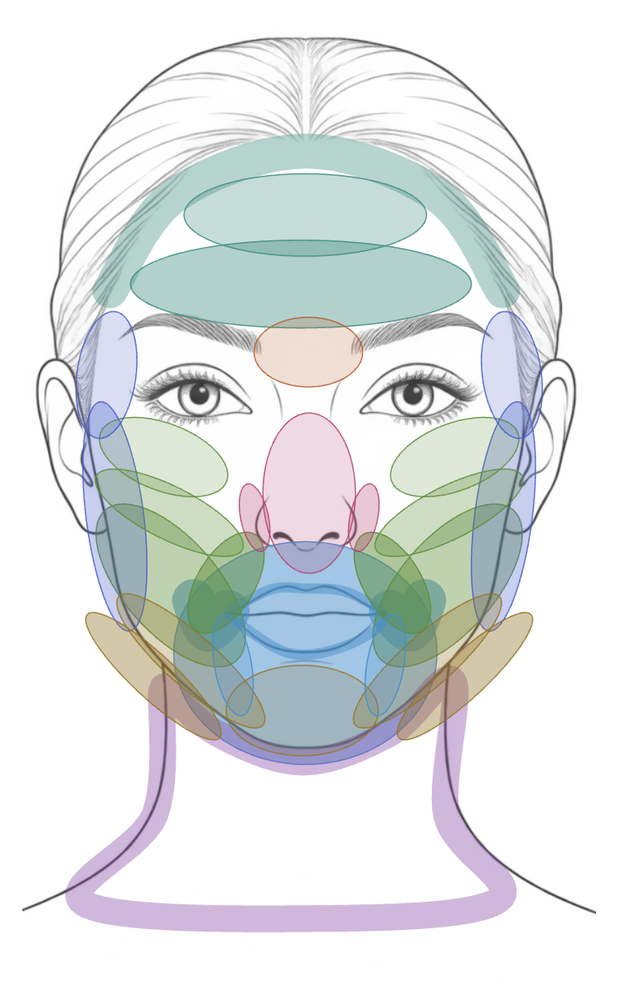
The map
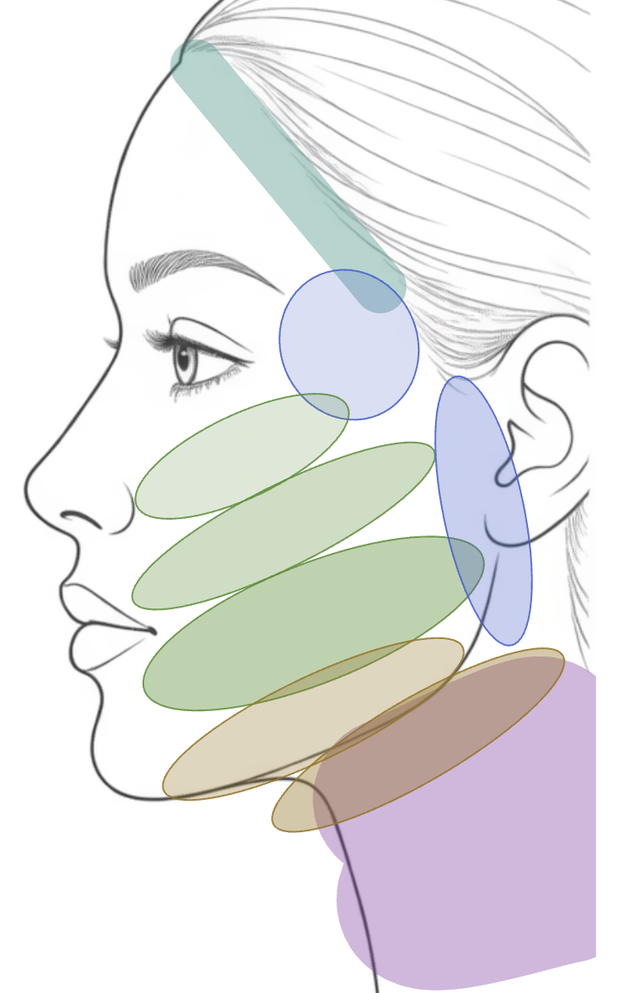
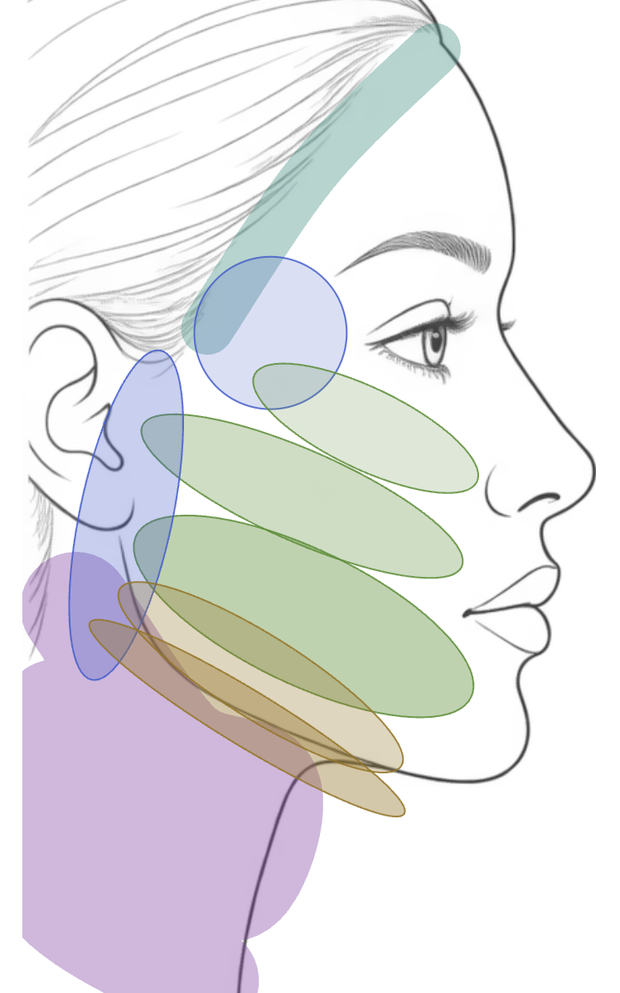
Twenty regions, three views.
Mark every region where you see activity, across the front and both profiles. Marks are shared between views, so the left jawline marked on a profile is already marked on the front.
Left and right are the client’s own sides, the way you would write them in a chart — not as you see them across the table.
Two ways to work
A first look, and a second set of eyes.
1st Look
Start with what you see.
Your eyes, your expertise, your investigation.
- Map the affected areas
- Identify lesion types
- Record distribution and patterns
- Answer the investigation questions
- Receive the evidence summary
2nd Look
See what you might have missed.
Everything in 1st Look, plus a second set of eyes.
- Upload client images
- AI reviews the images independently
- Compare its findings against yours
- Decide what stands and what changes
- Additional avenues worth investigating
Where you and the analysis differ, you decide. Accept what it found, adjust it, or keep your own reading. Your call is what gets recorded — the software never overrules you.
What comes out
An investigation, not a verdict.
Causes are ranked across every region you marked, so an exposure appearing in three places outranks one appearing in one. Distribution patterns are matched against the framework. The client questions are merged into a single list with no repeats. And where the lesion type warrants it, deeper considerations surface — never on location alone.